İstanbul Üniversitesi İstanbul Tıp Fakültesi Genel Cerrahi Anabilim Dalı
İstanbul Üniversitesi İstanbul Tıp Fakültesi Genel Cerrahi Anabilim Dalı
Minimally invasive abdominal surgery with laparoscopic and da Vinci robotic techniques. Less pain, shorter hospital stay, faster recovery — certified in Istanbul.
Minimally invasive surgery encompasses a range of techniques that allow complex abdominal operations to be performed through small incisions (0.5–1.2 cm), using a high-definition camera and slender instruments rather than a large open incision. The fundamental advantage is access to the same operative field with substantially less trauma to the abdominal wall.
Robotic surgery (da Vinci system) advances minimally invasive principles further by providing three-dimensional high-definition visualization, 7-degrees-of-freedom instrument articulation, tremor filtration, and motion scaling — offering precision that exceeds the natural capabilities of the human hand, particularly in anatomically confined spaces.
📌 Evidence base: Multiple international randomized controlled trials confirm that laparoscopic colorectal and gastric cancer resections achieve equivalent long-term oncological outcomes to open surgery, while offering significantly superior short-term recovery profiles.
Standard laparoscopy uses a 10–12 mm port for the camera and 2–4 working ports (5–12 mm) for instruments. Carbon dioxide insufflation creates a pneumoperitoneum, providing working space. The surgeon operates while viewing a two-dimensional high-definition monitor image at 4–10× magnification.
The technique is well-established for virtually all abdominal procedures. Randomized trials confirm equivalent oncological outcomes to open surgery for colorectal and gastric cancer resections, with superior short-term morbidity profiles.
The da Vinci robotic platform provides three-dimensional high-definition stereoscopic visualization — superior depth perception compared with 2D laparoscopy. Robotic instruments articulate with 7 degrees of freedom (compared with 4 for standard laparoscopic instruments), replicating and surpassing the dexterity of the human wrist in confined spaces.
The system filters physiological hand tremor and scales motion (10:1 ratio), translating large hand movements into precise micro-movements at the instrument tip. These properties are particularly advantageous for total mesorectal excision (TME) in rectal cancer, where the narrow pelvic space limits standard laparoscopic instrument mobility, and where preservation of the autonomic nerves governing urinary and sexual function is critical.
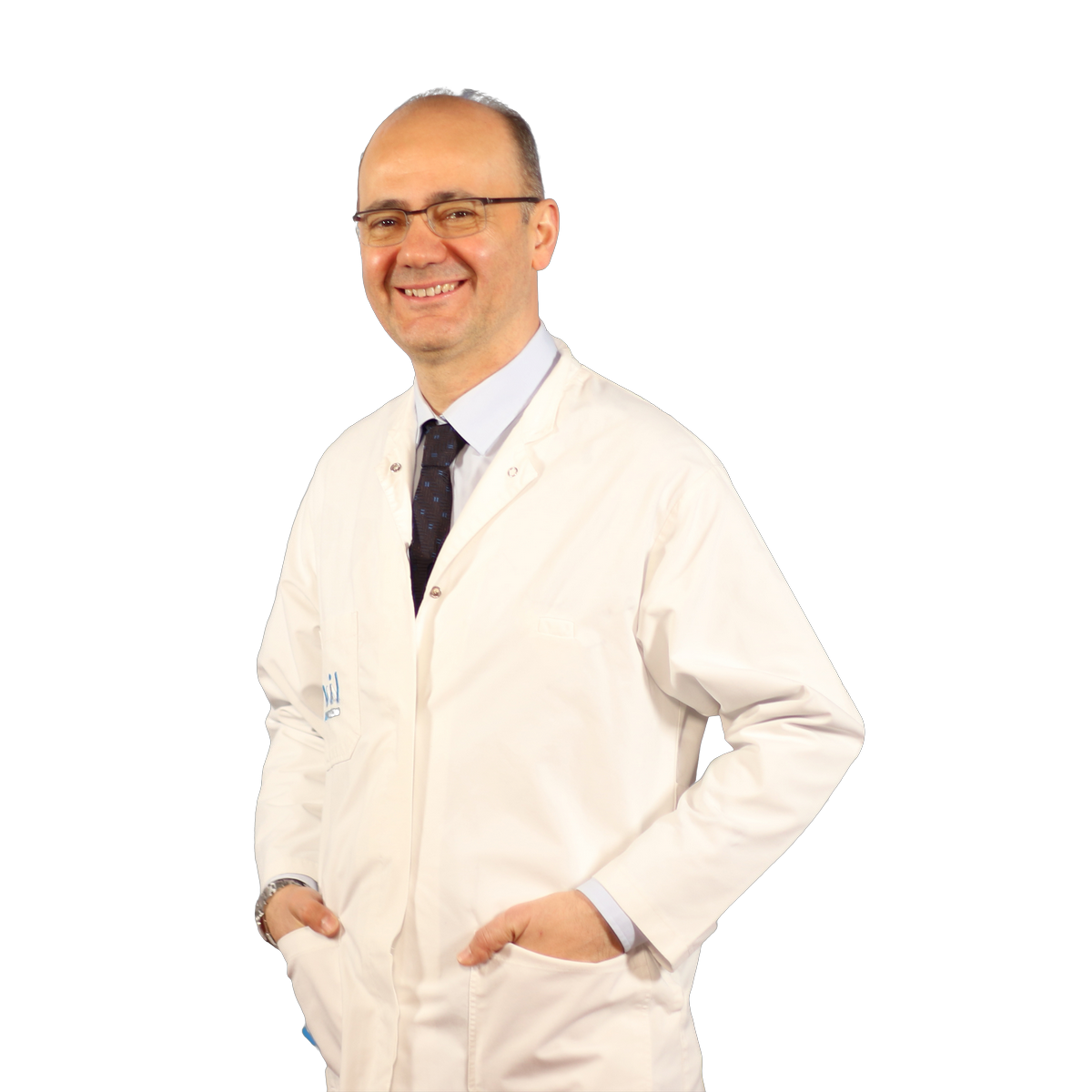
Prof. Dr. Hakan Yanar is certified in laparoscopic and robotic surgery and has performed over 5,000 minimally invasive procedures at Istanbul University Faculty of Medicine and Liv Hospital Ulus. International patients are seen in English, French, and Russian with full coordination support.
Contact Prof. Dr. Hakan Yanar to discuss laparoscopic or robotic surgical options in Istanbul.