What is Pilonidal Sinus Disease?
Pilonidal sinus disease is a chronic, acquired condition of the sacrococcygeal region in which hair penetrates the skin of the natal cleft, creating a subcutaneous cavity (sinus) lined with granulation tissue and containing hair fragments, keratin debris, and infected fluid. One or more external openings (ostia) drain onto the skin surface.
The condition predominantly affects young males aged 15–30 — particularly those who are hirsute, overweight, or who sit for prolonged periods (drivers, office workers). It does not resolve spontaneously; recurrent abscess episodes progressively impair quality of life and inevitably require definitive surgical treatment.
⚠️ Acute Pilonidal Abscess
Sudden onset of severe sacrococcygeal pain with local swelling, erythema, and fluctuance indicates an acute pilonidal abscess requiring urgent incision and drainage. Definitive flap surgery is planned 6–8 weeks later, after complete resolution of inflammation.
Risk Factors
👦
Age & Sex
Most prevalent in males aged 15–30. Androgen-driven hair follicle deepening and regional mechanical trauma during this period facilitate hair penetration into the natal cleft.
🪑
Prolonged Sitting
Drivers, office workers, and students who sit for prolonged periods are subject to chronic repetitive mechanical trauma to the sacrococcygeal region, increasing penetration risk.
🧔
Hirsutism
Individuals with dense body hair have a markedly higher risk of pilonidal sinus disease. Permanent laser epilation is the most effective preventive measure after definitive surgery.
⚖️
Obesity
A deep natal cleft and hyperhidrosis in overweight individuals create conditions favorable to hair penetration and sinus formation.
Treatment
Definitive treatment requires complete surgical excision of all sinus tracts with flap reconstruction. Flap techniques achieve significantly lower recurrence rates than primary midline closure or open healing by eliminating the deep natal cleft — the anatomical predisposing factor.
🚿
Incision & Drainage — Acute Abscess Management
Acute Phase
15–30 minProcedure time
LocalAnesthesia
6–8 weeksWait before definitive surgery
TemporarySolution
Incision and drainage provides rapid relief from an acute pilonidal abscess. Under local anesthesia, the abscess cavity is incised, drained, and packed. The patient is discharged the same day with wound care instructions and analgesics.
This is not definitive treatment — the underlying sinus persists. Definitive flap surgery is planned 6–8 weeks after complete resolution of the acute inflammatory episode. Operating in an infected field significantly increases wound complication rates.
- Immediate pain relief
- Same-day procedure under local anesthesia
- 6–8 week interval to definitive surgery required
- Antibiotic monotherapy is insufficient — drainage is mandatory
✂️
Karydakis Flap — Preferred Technique
Definitive Treatment
45–75 minOperating time
1 dayHospital stay
1 weekReturn to desk work
3–7%Recurrence rate
The Karydakis procedure excises all diseased sinus tissue and closes the wound with an asymmetric advancement flap that lateralizes the natal cleft. By displacing the suture line away from the midline, the deep furrow that facilitates hair penetration is eliminated — addressing the underlying anatomical predisposing factor.
Recurrence rates of 3–7% represent a substantial improvement over primary midline closure (15–25%) and open healing. Prof. Dr. Hakan Yanar applies this technique as the first-line option for most cases of pilonidal sinus disease.
- 3–7% recurrence — significantly lower than midline closure
- Anatomical correction eliminates the natal cleft furrow
- Wound heals in a lateralized, comfortable position
- Return to desk work within 1 week
💠
Limberg Rhomboid Flap — Extensive or Recurrent Disease
Extensive / Recurrent Cases
60–90 minOperating time
1 dayHospital stay
1–2 weeksRecovery
3–5%Recurrence rate
The Limberg flap excises the pilonidal disease area as a rhomboid and closes the defect with a rotational fasciocutaneous flap. It is particularly suited to extensive disease, multiple sinus tracts, or recurrent disease following prior surgery. Recurrence rates of 3–5% are comparable to Karydakis.
Adequate tissue mobilization enables tension-free closure even in large defects. Prof. Dr. Hakan Yanar selects the optimal technique based on disease extent and patient anatomy.
- Excellent option for extensive or recurrent disease
- Tension-free closure with rotational flap
- 3–5% recurrence rate comparable to Karydakis
- Recurrent disease following prior surgery — suitable candidate
Preventing Recurrence: Laser Epilation
Keeping the sacrococcygeal region permanently free of hair is the most effective strategy to prevent recurrence. Laser epilation is the gold standard method, recommended from 4–6 weeks postoperatively for 6–8 sessions. All patients undergoing pilonidal sinus surgery should be counseled about postoperative laser epilation as part of their long-term management plan.
Pilonidal Sinus Surgery in Istanbul
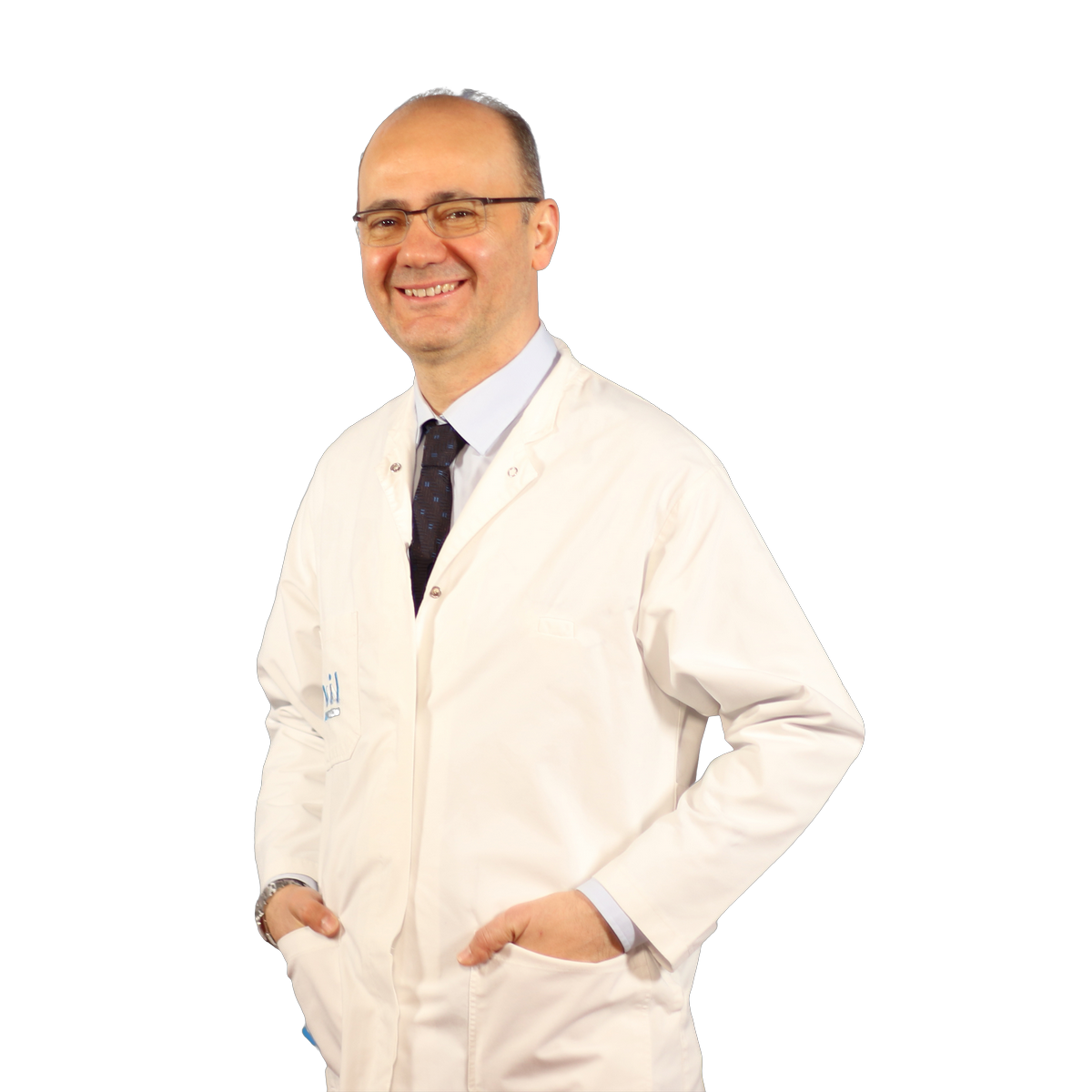
Prof. Dr. Hakan Yanar performs pilonidal sinus surgery using Karydakis and Limberg flap techniques at Liv Hospital Ulus, Beşiktaş, Istanbul. International patients are seen in English, French, and Russian.
Sık Sorulan Sorular
What is pilonidal sinus disease?
Pilonidal sinus disease is a chronic acquired condition caused by hair penetrating the skin in the sacrococcygeal (natal cleft) region, forming a subcutaneous cyst or sinus tract containing hair, keratin debris, and infected fluid. It predominantly affects young males aged 15–30.
Does pilonidal sinus disease resolve without surgery?
Acute abscess episodes can be managed with incision and drainage, but the underlying sinus does not resolve spontaneously. Recurrent disease inevitably requires definitive surgical excision. The Karydakis flap and Limberg rhomboid flap techniques offer the lowest reported recurrence rates.
What is the Karydakis flap procedure?
The Karydakis procedure excises all diseased tissue and closes the wound with an asymmetric flap that lateralizes the natal cleft, eliminating the deep midline furrow where hair penetrates. It offers recurrence rates of 3–7%, substantially lower than primary midline closure or open healing techniques.
What is the Limberg flap procedure?
The Limberg (rhomboid) flap excises the diseased area as a rhomboid and closes it with a rotational fasciocutaneous flap. It is particularly suited to extensive or recurrent disease and achieves recurrence rates of 3–5%, comparable to Karydakis.
How long does pilonidal sinus surgery take?
Karydakis or Limberg flap procedures take approximately 45–90 minutes under spinal or general anesthesia. Hospital stay is typically 1 day. Most patients return to desk work within 1 week; complete wound healing occurs in 2–3 weeks.
Can pilonidal sinus disease recur after surgery?
Flap techniques (Karydakis, Limberg) achieve recurrence rates of 3–7%, compared with 15–25% for midline closure and open healing. Laser epilation of the natal cleft region after surgery significantly reduces the risk of recurrence.
What is the role of laser epilation?
Permanent hair removal by laser epilation of the sacrococcygeal region eliminates the primary source of hair penetration and is the most effective measure to prevent recurrence after surgery. It is recommended 4–6 weeks postoperatively, with 6–8 sessions typically required.
What should I do if I have an acute abscess?
An acute pilonidal abscess requires urgent incision and drainage to relieve pain and control infection. Definitive flap surgery is planned 6–8 weeks later, once inflammation has fully resolved. Operating on an acutely infected field significantly increases complication rates.
Book a Pilonidal Sinus Consultation
Contact Prof. Dr. Hakan Yanar for evaluation and definitive flap surgery in Istanbul.